Wednesday, January 21, 2015

Jiggers Campaign


Jiggers!  What are they?  In America we know about ticks, fleas, chiggers, bed bugs, mosquitoes and other pesky insects -- but jiggers?  I had never heard of them until I moved to Kenya.  And trust me, you may not really want to know.  In fact, this blog contains pictures that will most likely turn your stomach.  But hopefully you can brace yourself and read it to the end, knowing that those who are suffering need your help, and through Starfish Charities, we are trying to make a difference in the lives of individuals.

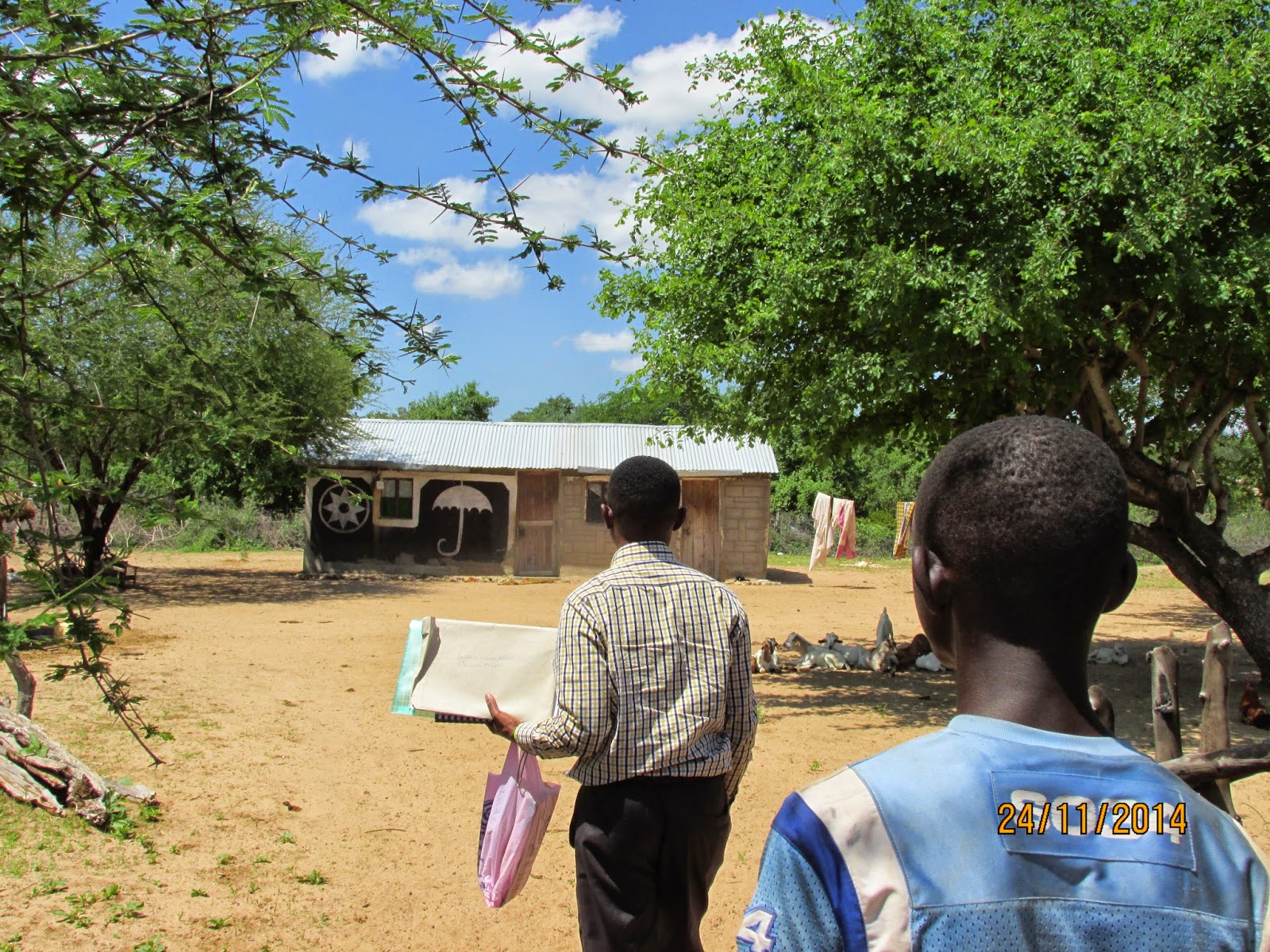
In late November, Starfish Charities joined hands with Asira Foundation and AHADI (swahili for promise) Kenya to reach out to the people in an area of Western Kenya.  Many individuals in that area have been afflicted with jiggers.  Our venue was a Primary school (see sign below).


Standing with me is Franklin Asira (Asira Foundation) and Fred with AHADI Kenya.


We spent a day training volunteers on the ins and outs of jiggers infestation, treatment, and prevention.  I left the training to the experts!


Fred did an excellent job explaining all about jiggers and proper treatment.

WHAT IS A JIGGER?
It is a small pin head sized flea found in sandy terrain of warm, dry climates.  It feeds on warm blooded hosts including man, cats, dogs, rats, pigs, cattle and sheep.  Poor people living in unhygienic, unsanitary dwellings get jigger infestations.  Economic activity reduced by poor health due to infestation, makes people poorer and/or unable to rise out of poverty.


On treatment day, we needed water -- lots of water.  These eager students carried water to our treatment area.


Meet Simon, one of our volunteers who agreed to register the individuals who required treatment.  This information was necessary for followup during the days and weeks ahead.  We couldn't have done this without the local volunteers.


Step one is identifying those who were affected.  It wasn't difficult.  When your feet look like those below, it is not only very painful, but almost impossible to wear shoes.


The impregnated female flea feeds by burrowing into the skin of the host under the toe or fingernails, resulting in a sore.  As the flea continues to feed on the host's blood, it enlarges and forms a round sack full of eggs with the shape and size of a pea.  The flea releases the eggs and is slowly sloughed from the host's skin.  The holes you see are where the pod or sack has worked its way to the surface, or in many cases, where the individual has picked at it with a needle or pin -- mostly likely unsanitary and causing a greater problem with infection.


After the affected ones were identified, the first order of business was to get their dirty feet washed.  It had rained the night before, so many showed up barefooted, caked in red soil.


Our Public Health Workers (PHW) are volunteers in the communities.  They worked tirelessly with us all day to attend to these students and community residents.


This man is the Principal of this school and was very excited when Franklin responded positively to conducting this Jigger's treatment in his school.  The infestation causes many students to miss school or drop out all together.


Although jiggers are normally found in the feet, it is not limited to feet.  You can literally get them anywhere on the body, but most of what we saw were feet, with a few individuals also having them on their hands.


After the feet are cleaned, the toenails must be trimmed as much as possible.


This just looks like a mud encrusted foot, but the truth is it was one of our worst cases.  The mud was embedded in the crevices created by the jiggers.  His feet were washed several times before treatment could happen. 


You can imagine how difficult walking would be.  They contort their feet to stay off the affected areas as much as possible, but the end result it the feet begin turning outwards as the infestation grows worse and worse.


This child has lost most of his toenails due to the jiggers under the nails.


After washing the feet, and clipping the nails, the next step is to soak in a solution of potassium permanganate.  This purple solution is like magic!  They soak for 15 minutes in this solution, which begins the process of killing the embedded jiggers.


No worries about cross contamination, so many shared basins as they soaked.


After soaking for 15 minutes, they had to "dry" for 15 minutes.  Then they were moved to another area for the next step.


The final step is to smear their feet with Vaseline.  This not only softens the feet, but it helps to smother the jiggers.  This treatment is supposed to be repeated three times a day for two weeks. 


This is a jigger sack in the palm of a worker's hand.


This poor child could hardly walk and was by far, the worst one we saw that day.


This is a month later, after treatment.  Although it still isn't completely gone, the relief to this child is immeasurable.


Another shot of the top of his foot.  His nails will have to regrow, but with eradication of the jiggers in his home area, treatment followup, and better hygiene, he should fully recover.


These are the treatment tools and medications needed.  The Sevin dust is for the home treatment area.


The purple solution is poured into five liter containers for individuals to take home for the followup treatment.


These backpack sprayers are needed to fumigate the home areas twice a year to help eradicate the infestation.  Very few families in these areas can afford the treatment for the soil or treatment for jiggers.  They depend on well wishers, or in most cases just continue to suffer.

I have to tell you this really pricked my heart.  This sprayer is only $30 per sprayer.  We need at least 10 to start with.  Then the Icon solution to put in the sprayer is approximately $10 per household.  This can quickly run into more money than these communities can imagine.  If you would like to help make a difference to these hurting individuals in these communities, please contact me at rabquilt@yahoo.com and share with me how you can help.  Or send donations directly to Global Outreach International, P. O. Box 1, Tupelo, MS 38802 for Rhonda Baxter and indicate it is for Jiggers Eradication.  Any help would be appreciated.


Wednesday, December 10, 2014

New Borehole Makuka Kenya 2014


Boreholes!  Most Americans would call them water wells, but whatever you call them, they make a life-changing difference in whole communities.  As they say "water is life" and it is very evident in the lives of individuals who have had life-long struggles with finding water for their families and their animals.

I was recently connected with Pastor Brandon Rainey of First Baptist Church, Rogersville, AL.  His church has connections in Kenya and they were made aware of the need for a borehole in Makuka, which is several hundred kilometers from Nairobi.  The need is great, and the church began raising funds to make this possible.  I was asked to help facilitate the drilling process and oversee this worthy project.

A few weeks ago, I went with the local pastor, Pastor Bosco, and Paul, of Great Ventures Company Ltd. (the drilling company) to Makuka for a site inspection.

If you could put a big red "X" between these two men, you would see where the proposed borehole will be drilled.


Our welcoming committee!  The local children saw the car pull up and surrounded us with welcoming smiles.


Pastor Bosco is from this area, so of course, it is a must that we visit his family while we were there.  This is his brother's home.  I was introduced to his sister-in-law, and was shown the home I will be staying in next week when during the drilling.


The traditional structures in this area are very different from the Maasai homes I am accustomed to visiting.  The building on the left is the kitchen, and the structure on the right is a storage area.


This is the chicken house.  In keeping with the Kamba culture, when we were leaving I was given a live chicken to take home with me!  I have never carried a live chicken home in a sack.  Life here is never boring.


As we were leaving the village, they wanted me to see where the local women get their water now.  I am not sure how far we were from the village, but it was not close -- perhaps a couple of kilometers.  The women have to carry 40 pound containers of water back to their homes.

We are standing on a dry river bed.  When they do get rains a few times a year, this dry bed swells with water, but most of the year, this is how it looks.


The women have to dig until they reach water.  Its not clean water, but their families and animals have to have water to sustain life, so they do what they must.


This is where they are currently getting water from.  They began with a small hole, but as the water table drops, the hole gets larger and deeper. The mounded up dirt is from the digging.  They surrounded the "pit" with scrub to warn others of its presence, and to hopefully keep children out of danger.


We entered the gate and began our walk downward to see the hole.


I am amazed at the depth of this hole and how much digging it requires.  It is sandy and loose.  We often slid as the sand moved.


This is the pit.  The branches you see below, are put across the opening to try to stem the collapse of the hole.  It doesn't always work.  Women have lost their lives as the hole collapses and they are buried under all that sand.

They most likely do this as a team, with some brave soul literally descending to the water level and passing the water upward and handing it off -- over and over again -- til everyone has their containers filled and the troughs outside the pit are filled so the animals can drink.


I zoomed a lot and got this picture of the actual water hole.


Here one of the men is standing on the supporting branches.  Very scary for me.  I can't even imagine this as a daily event in my life.


You can see how far down we were.  Those aren't natural hills behind us.  That is the sand that is mounded up as the women dig deeper and deeper.


We were running late that day trying to get back to Nairobi before dark.  I asked if we could bypass this hole and see it when I return for the drilling.  They said "no, because if it rains, the hole will collapse, the river will flow, and there will be no evidence it was ever there.  Can you imagine having to do this over and over again through the year between the rains?


Please pray for the drilling of the borehole in Makuka Kenya.  Pray for a successful well.  Pray for the safety of all concerned.  Pray for me as I travel to this remote village next Wednesday.  I plan to stay in the village for three days, and hope I get to see the water flow!  Please check back to see my blog update after the borehole is drilled.  I know you will see many smiles on the faces of the villagers.

Saturday, December 6, 2014

2014 Literacy Graduations


Each year, since 2008, Adult Literacy has been a huge part of Starfish Charities.  It never gets old!  In each community we have reached into, we have observed the transformation that occurs when individuals learn to read.  Some will move very quickly through the curriculum, while others move very slowly.  We have always tried to keep our numbers below 15 per class/teacher so we can give them our best.

This year, however, one of our classes had 22 students.  They were so eager to learn and our teacher recruited a helper, so we said yes.  Below are pictures of the graduation of those 22 individuals.  What a joy it was to see the smiles on their faces.


Addressing the students and their families and encouraging them to keep on keeping on is always a pleasure.  I was in the States most of the time this class was running, but our two faithful teachers kept things going.  They even held some nighttime sessions when needed.  I am so proud of all of them.


One of our students on graduation day.  They show up in their finest.  Their beautiful beadwork is such a part of who they are in their culture.


This is the pastor of the church in which we held our classes.  He never had the opportunity to go to school, so he was thrilled to join the class and learn.  Here he is demonstrating his ability to write his name.  That doesn't sound like much, but prior to this, when he had to sign a legal document, the best he could do was put an "X" on the signature line.


Meet, James (middle), our faithful teacher.  He taught Kindergarten in the local school in the morning hours, then continued with adult literacy in the afternoons three days per week.  Also pictured with me and James, is Pastor John Shakai, one of my board members.


Gifts are always exchanged on these celebratory days.  I started with beads that had been given to me in the past, but they just kept adding more.  This sweet lady is showing off her new lesso (wrap).  We gave each lady a new one, along with a couple of other gifts.


My friend, Gloria, joined us for the day.  They also gave her a necklace.  They are always so excited to have visitors.


Another friend, Ellis Townsend, was here in Kenya and decided to join us for the day of celebration.


You can't have a celebration without a cake.  Cake is a very big deal in these communities.  So, we cut the cake at the end of the day and then had lunch!  Americans think of cake as dessert.  Kenyans look at cake as part of the celebration.


Me and the pastor after the ceremony.


The whole class and teachers, and a few children.  They love having their pictures taken!


Later that week, we had another graduation at another community.  Isek is a much smaller community, so we had a much smaller class.  Also, during months of July, August and September, they experienced a severe drought.  When that happens, they have to move their animals to greener pastures.  Some of these communities almost literally clear out until the rains begin.

This class only started with 12 students.  Eight attended for several weeks, but in the end, we only had four graduates who met the attendance requirement to graduate.  We felt it was important to acknowledge these faithful four, so we had a celebration just for them.


This is one of our teachers.  We didn't really need two teachers, but these young ladies are best friends and wanted to do this together.


Pictured here are both of our teachers receiving their certificates and gifts.


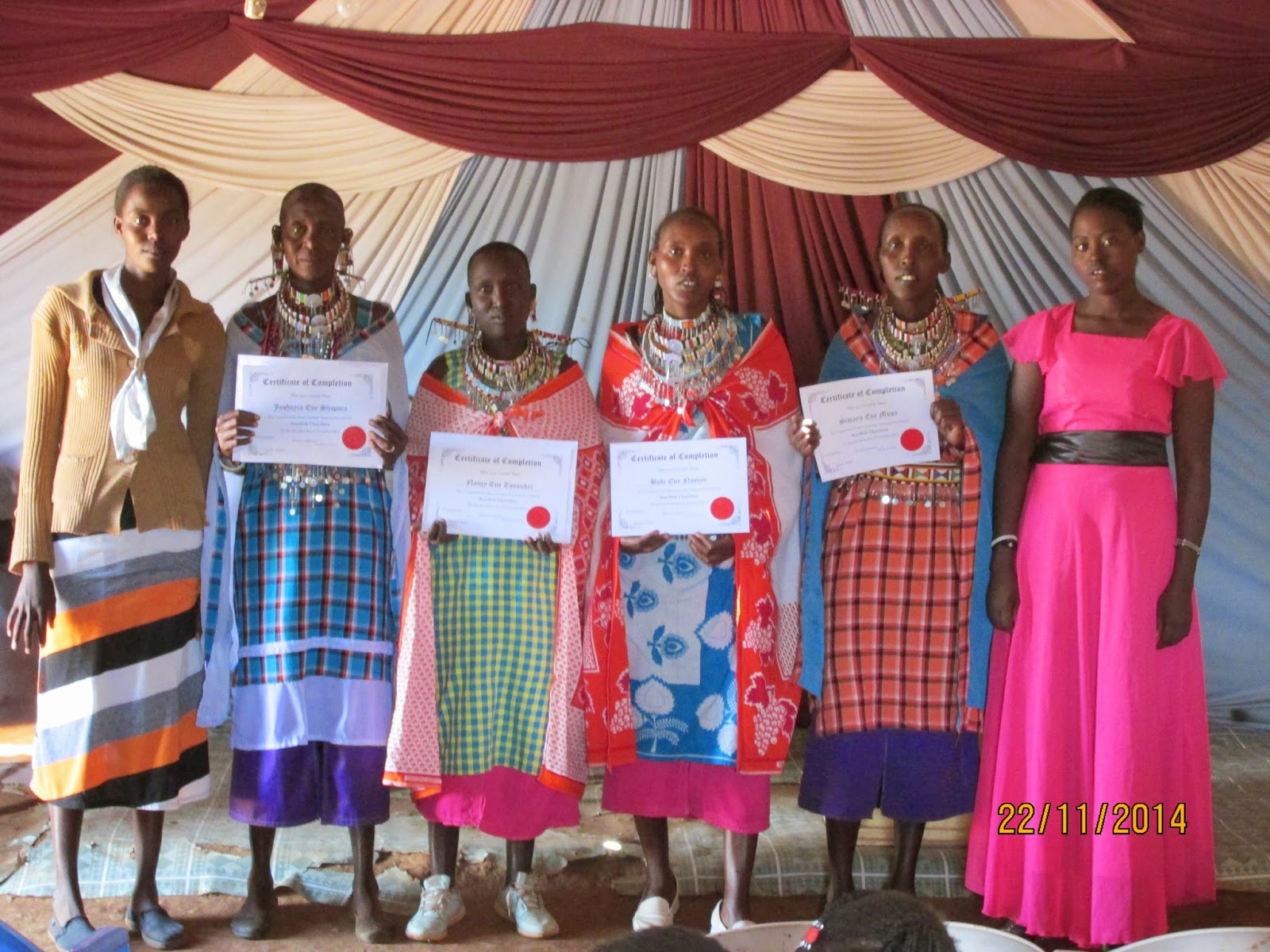
Our graduates with their teachers. Their ability to read enables them to read their Bibles.  That is our ultimate goal! 


And, of course, the cake!  Notice the misspelling on Succes?  Maybe our baker needs to attend class.  No worries, it tasted great!  


A special thank you to those of you who support Starfish Charities on a regular basis or even just occasionally.  Every little bit helps make a difference in the lives of these precious people. Never think "little" is too little.  It all adds up to help me continue the work God has led me to do.